The launch of a new graphics card always gets my pulse racing, and NVIDIA's reveal of the RTX 5080 with its cutting-edge DLSS 4 technology took that excitement to new heights. This AI-powered innovation promises visual fidelity and frame rates surpassing previous limits. Yet, one glance at my aging gaming rig gave me pause.
My trusty RTX 3080 had delivered smooth 4K gameplay at ultra settings for years, but its golden era proved fleeting. Gradually, frames dropped to 30 until settings downgrades became inevitable. As someone who cherishes gaming artistry, I hated compromising visual quality – could my system even handle uncompromised performance?
Surprisingly, the GeForce RTX 5080 proved compatible with my veteran build, especially with my existing 1000-watt PSU easing the power transition from the 3080.
The journey wasn't flawless. System bottlenecks revealed performance limitations, yet DLSS 4's multi-frame generation technology delivered astonishing results. Despite initial skepticism, this breakthrough might've finally won me over.
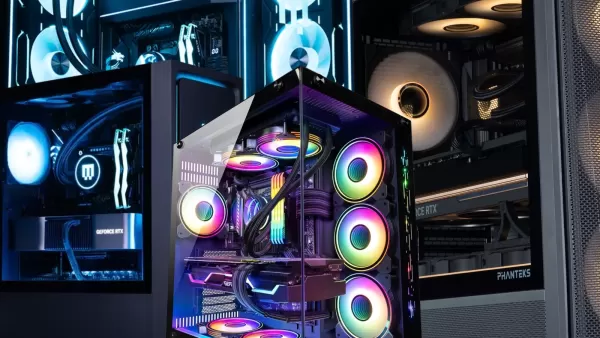
The Four-Hour RTX 5080 Installation Odyssey
"Aging" might be overstated – my AMD Ryzen 7 5800X with 32GB RAM on a Gigabyte X570 Aorus Master motherboard still holds its own. Graphics card swaps typically rank among simpler PC upgrades, but fate had other plans.
Assuming my RTX 3080's PCIe 8-pin cables would suffice proved misguided. Plugging them into two of the 5080's three adapters yielded no power – predictable, yet frustrating.
With my system already dismantled, desperation led me to DoorDash for Corsair PCIe Gen 5 cables from an out-of-state Best Buy ($44 well spent – power cravings demand satisfaction).
Success remained elusive post-installation. The GPU flickered weakly while my motherboard's VGA indicator glowed ominously. The culprit? The X570's massive chipset fan obstructed full PCIe x16 insertion. No amount of force solved this clash of titans.
Ultimately, Nvidia's flagship found itself relegated to a PCIe x8 slot – raising questions about performance impacts alongside my veteran CPU.

Pushing the RTX 5080 in an Aging System
Thirty benchmarks across five titles revealed middling raw performance – until DLSS 4 unleashed Nvidia's promised numbers. While committed to experiencing developers' artistic vision unaltered, DLSS 4 emerges as the necessary compromise for systems like mine.
For the uninitiated: DLSS 4 combines supersampling with RTX 50-series exclusive Multi Frame Generation – AI generating up to three frames per native frame. Game support varies, though Nvidia's app allows manual overrides.
Monster Hunter Wilds – my first test – exposed my RTX 3080's limitations. At 4K Ultra with RT High, native rendering struggled to hit 51 fps. DLAA with standard frame generation (2x) boosted this to 74 fps, while Ultra Performance mode achieved staggering 124 fps.
Avowed proved more taxing – Ultra 4K with RT yielded just 35 fps natively. Engaging DLAA with MFG skyrocketed performance to 113 fps (223% improvement), with Ultra Performance doubling that again.
Oblivion: Remastered delivered the harshest reality check, struggling at 20-30 fps native Ultra 4K RT. MFG implementation transformed this to 95 fps – proof that even antique engines benefit from modern AI acceleration.
Marvel Rivals maintained competitiveness throughout, though latency metrics revealed trade-offs. Native 4K delivered 65 fps/45ms, while DLSS Native with MFG achieved 182 fps/50ms – visually ideal but marginally slower response. Performance mode with standard frame generation struck the best balance at 189 fps/28ms.
Black Myth Wukong's benchmark capped at standard frame generation but impressed nonetheless: Cinematic 4K RT Very High jumped from 42 fps native to 69 fps with acceleration – suggesting theoretical 123 fps potential with full MFG support.
Raw GPU performance proved disappointing across the board, hampered by both legacy components and the RTX 50-series' evolutionary (rather than revolutionary) performance leap. DLSS 4's transformative impact saved the day.
GPU Upgrades Without Full System Overhauls
DLSS 4 and MFG aren't flawless – AI-generated frames occasionally introduce texture artifacts and UI anomalies. This technology trades uncompromised fidelity for playable performance, offering salvation for poorly optimized ports while hopefully not encouraging developer complacency.
The key takeaway? Modern GPUs deliver remarkable results even in compromised systems. While I contemplated drastic motherboard modifications for PCIe x16 access, DLSS 4's capabilities rendered such measures unnecessary.
A full system upgrade isn't mandatory – a robust PSU (850W minimum for RTX 5080) and proper cabling suffices. With GPU prices soaring and availability uncertain, restraint proves wise.
While my setup's longevity remains uncertain, DLSS 4 has bought me precious time – perhaps just enough for one last memorable encounter with Wesker.