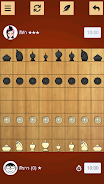
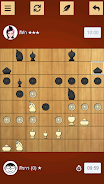
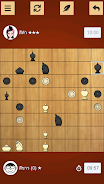
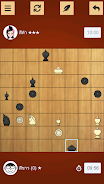
Makruk, also known as Thai chess, is a traditional strategy board game with distinct rules and unique pieces. Played on an 8x8 grid, it includes pieces such as the king, queen, and pawns that each follow their own movement patterns. The goal is to checkmate the opponent’s king. Emphasizing deep tactical skill and strategic thinking, Makruk remains a beloved pastime in Thailand.
Key Features of Makruk
Play Against AI: Face off against AI opponents across multiple difficulty levels, ranging from Easy to Expert.
Daily Challenge: Take on a new puzzle every day to sharpen your skills.
Global Leaderboard: Compete with players worldwide and rise through the ranks.
Share Your Games: Share your standout moves and games with friends and family.
Undo & Save/Load: Undo moves and save your game to resume later.
Timer Based Game: Add excitement with timed matches.
Makruk (Thai: หมากรุก; rtgs: Mak Ruk), or Thai chess, is a board game descended from the 6th-century Indian game of chaturanga or a close relative, making it closely tied to the ancestry of modern chess. It is considered the closest living relative to the common ancestor of all chess variants.
Around two million Thais are able to play Makruk, while an estimated 5,000 play international chess.
According to former world chess champion Vladimir Kramnik, Makruk is more strategically complex than international chess. It requires meticulous planning, resembling the endgame phase of international chess from an early stage.
Game Rules
---------
The Pawn
(called เบี้ย bia—a cowry shell, once used as currency) moves and captures like a pawn in chess, but cannot advance two squares on its first move, so en passant is not possible. A pawn reaching the sixth rank is always promoted to a queen (met).
The Queen
(called เม็ด met) is the weakest piece, moving one square diagonally in any direction—similar to the fers in shatranj or a cat sword in dai shogi.
The Bishop
(called โคน khon, meaning nobleman or mask) moves one step diagonally or one step forward, much like the silver general in shogi.
The Knight
(called ม้า ma, horse) moves identically to a knight in Western chess: two squares in one direction, then one square perpendicular. It leaps over any intervening pieces.
The Rook
(called เรือ ruea, boat) moves like a Western chess rook: any number of squares horizontally or vertically.
The King
moves one square in any direction, as in international chess. Historically, it could make a knight jump (a move known as Ses) on its first turn—though this rule is no longer commonly used in Thailand. The game ends when the king is checkmated.
What's New
Bug fixes and performance improvements.
Tags : Card